- 1
Ride out by early evening: displays switch on around sunset, near 4:30 to 5 pm, and most homeowners switch off between 9 and 10 pm.
- 2
Monday through Thursday evenings have the thinnest crowds; Friday through Sunday pack the sidewalks and the streets.
- 3
Dress for 25 to 40°F with harbor wind: hands and face take the worst of it on a bike.
Why see the Dyker Heights Christmas lights by bike
The decorated blocks of Dyker Heights are open to everyone, free, with no ticket and no gate. A residential neighborhood in Brooklyn turns itself into the brightest street scene in the city every December, and it stays safe to walk through after dark.
The trouble is getting there. Buses park at the edges and unload hundreds of walkers onto the same two streets. Drivers circle for parking while police close the core blocks to cars.
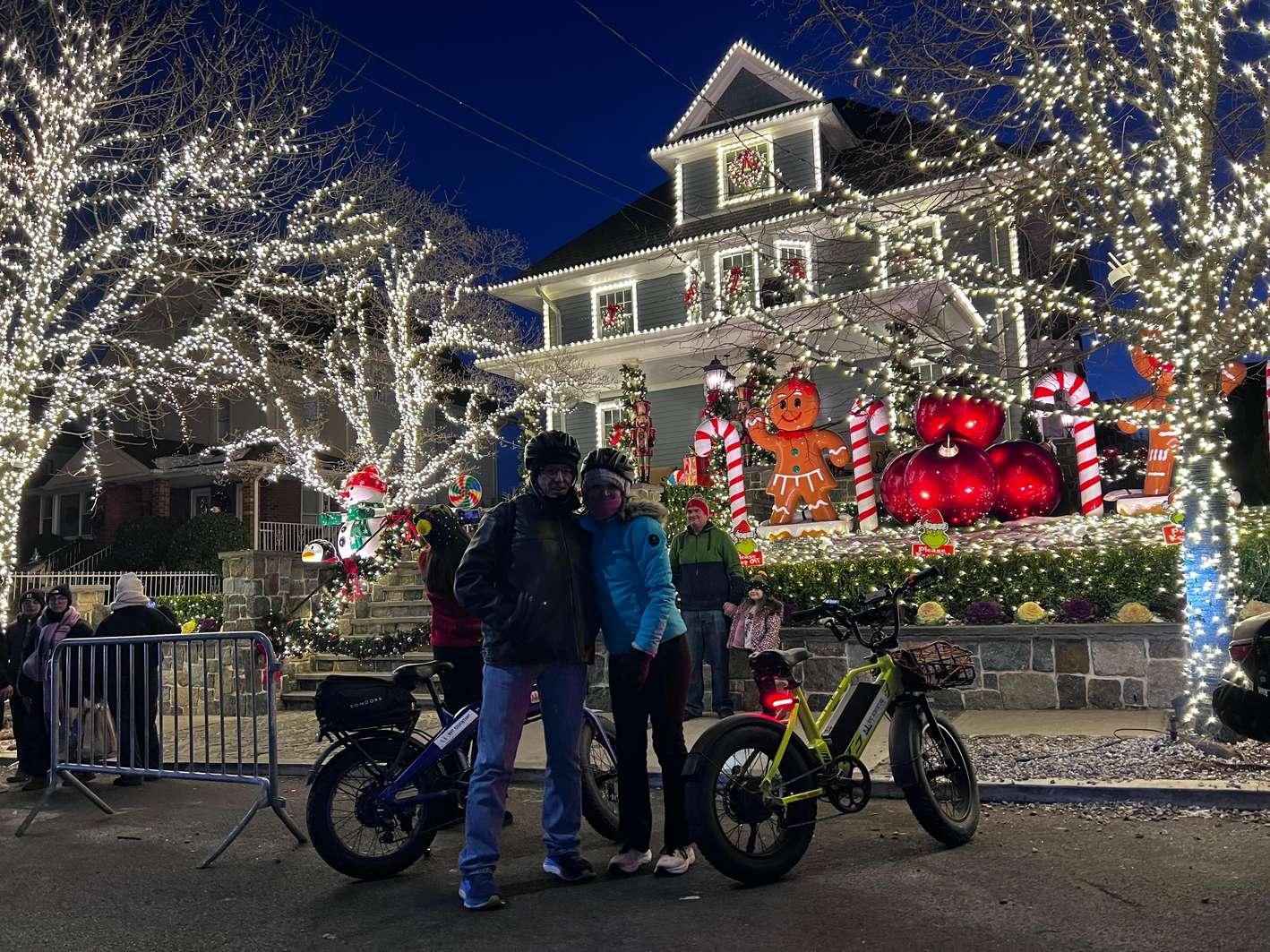
On a bike, none of that applies: you slip past the traffic, stop beside the houses you want, and keep moving when a crowd bunches up.
The e-bike route covers the entire neighborhood, while most visitors see two streets at most, and the motor takes the sting out of the hills while you sit in winter layers. The whole outing, ferry crossings included, runs about 5 hours and 20 miles from Manhattan and back.
That length is worth knowing before you commit. It is an evening, and the payoff is the part of the night the buses never reach.
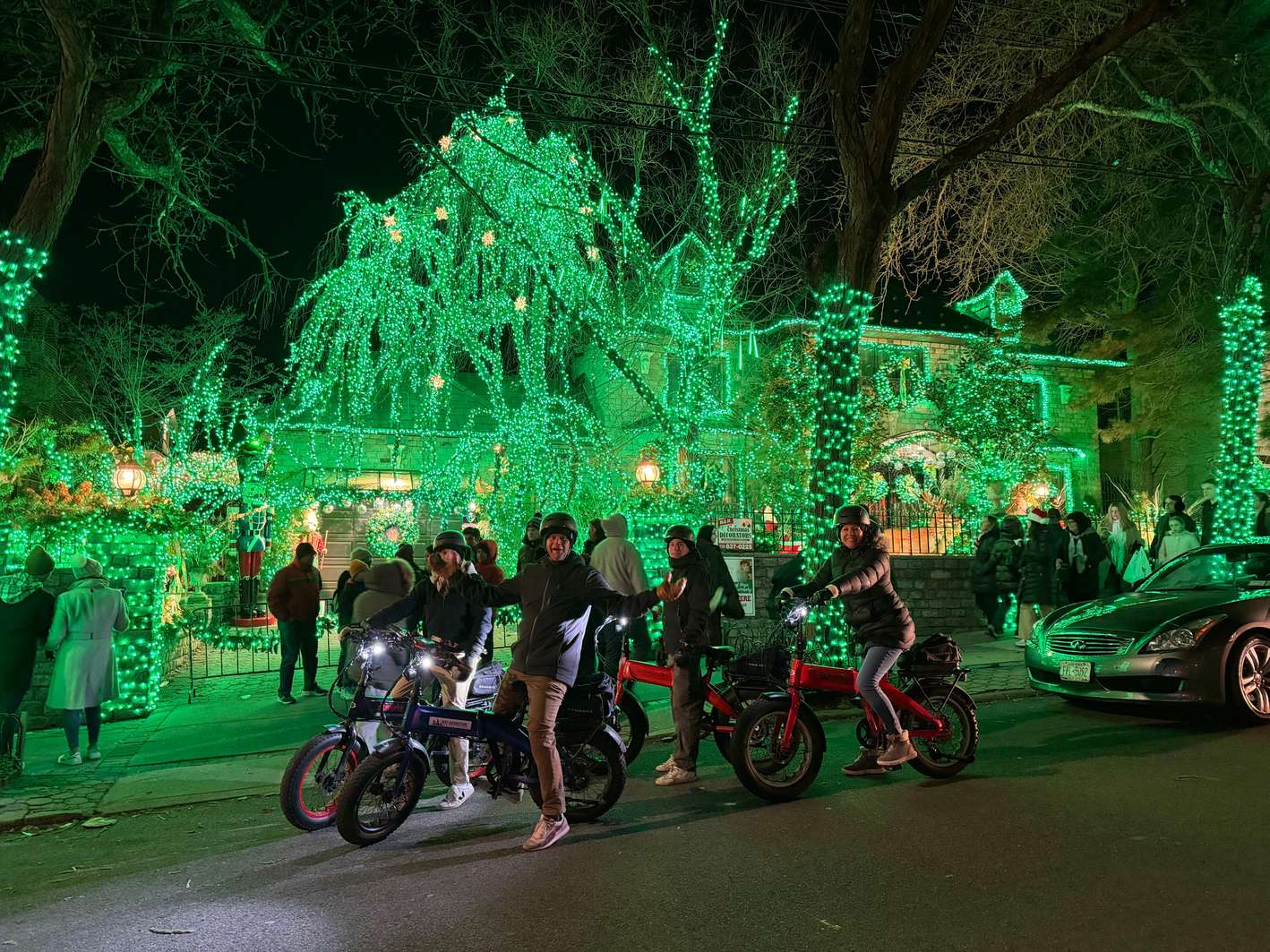
Best dates and times to see the Dyker Heights lights
Nobody switches these lights on officially. The displays are private, homeowner-run, with no schedule anyone publishes. In practice the neighborhood lights up in late November after Thanksgiving and is broadly illuminated by December 1, staying on nightly through the month. December is the peak; January tails off fast.
Around Christmas the show does not stop. Homes stay decorated between Christmas and New Year's Eve, through holiday week and New Year's weekend, and some houses keep the lights up into the first days of January. Rainy nights do not dim them either; the displays stay on.
Arrive around dusk, between 4:30 and 5:30 pm, and you catch the houses flicking on before the tour buses land. Between 7 and 9 pm the sidewalks are at their worst. After 9 pm it thins out again, but that is when most homeowners start shutting down, some holding out until 11 pm
January: 5 out of 5 for how busy it gets.
Tap a month to read it.
Pick a Monday through Thursday evening if you can; the weekend brings packed sidewalks and heavy traffic. The quietest nights also make the riding easier, with fewer pedestrians to thread between.
Getting to Dyker Heights - the ferry route from Manhattan
The route skips the roads entirely. From a meeting point at Hudson Yards, you cycle a short way to a ferry terminal, then ride the water down the Hudson River and New York Harbor to Bay Ridge in Brooklyn. From the Bay Ridge landing, it is about a 20-minute bike ride to Dyker Heights.
The ferry leg is the part people do not expect. Bikes ride the NYC Ferry vessels legally, and e-bikes with fully working pedals count as bikes; walk yours on board, because riding aboard is barred.
On the return, the boat takes about 30 minutes up the harbor, then a 5-minute ride along the Hudson River Greenway closes the loop back at Hudson Yards.
New York City law requires riders to be at least 16 to operate an e-bike Younger family members cannot take the handlebars, so plan a different outing for them
Getting to the meeting point is simple in itself: the 7 subway line ends directly at 34th Street, Hudson Yards, with exits on Hudson Boulevard between 33rd and 35th Streets.
The e-bike tour step by step - meeting point, ferry, and light loop
The night runs in one clean sequence. Bikes are prepared 15 minutes before departure at 29th Street and 11th Avenue in the Hudson Yards area, where setup and a safety briefing come first. Then the ferry terminal, then the water.
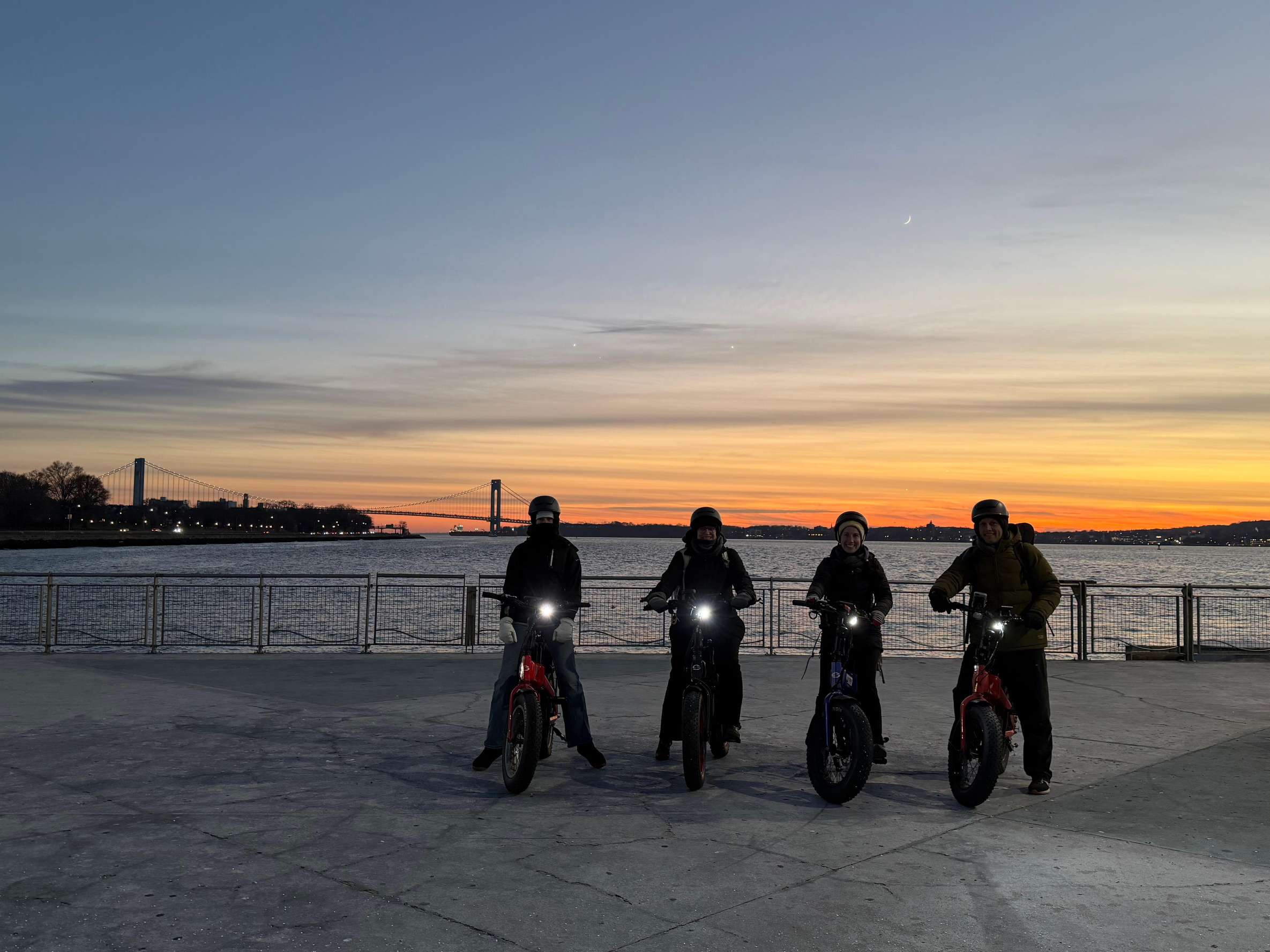
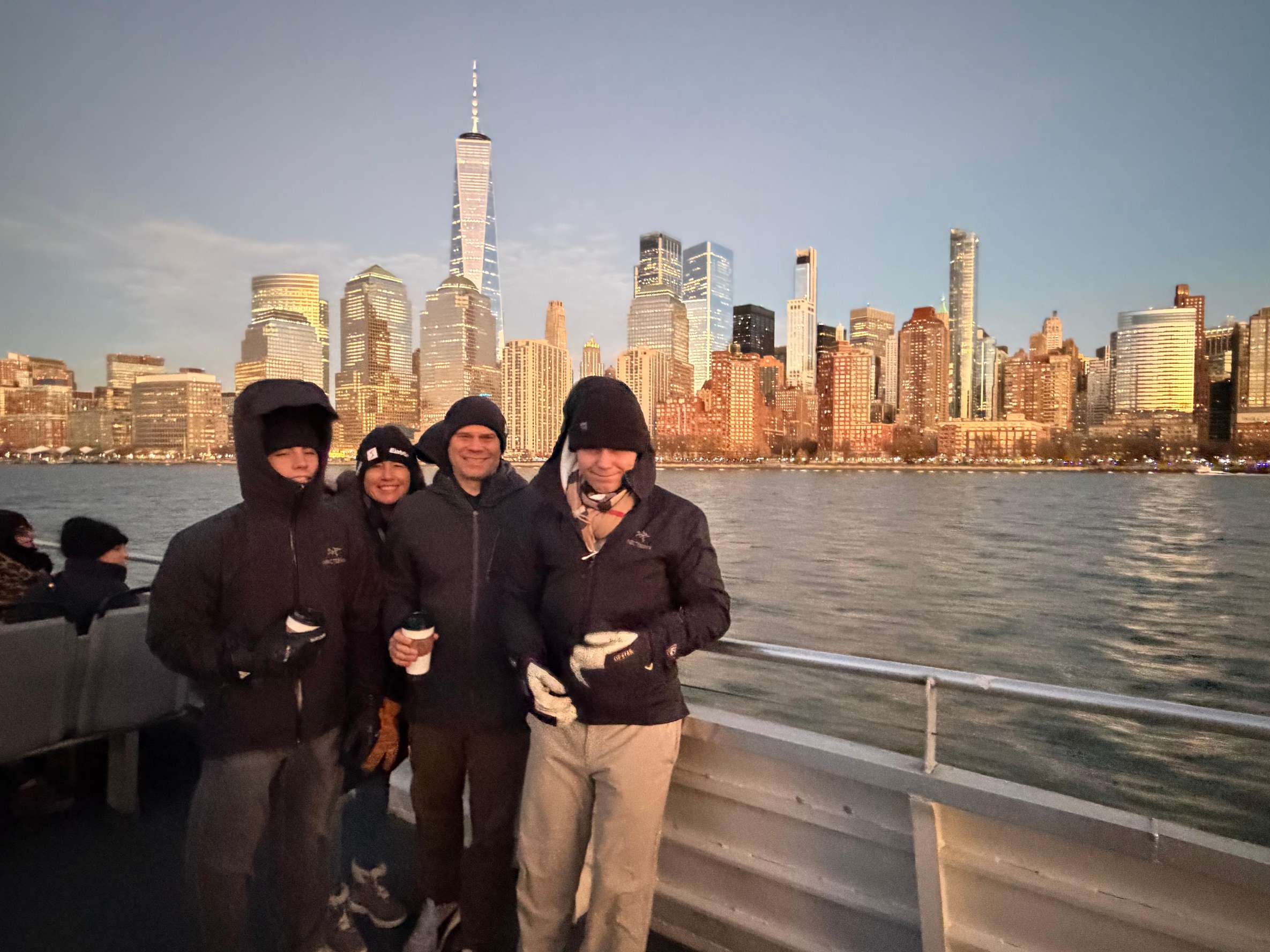
The crossing down the Hudson at sunset is the first reward: on clear evenings you see the Statue of Liberty against the fading light, with the skyline behind you. In Bay Ridge, the wheels take over for a 20-minute ride into Dyker Heights.
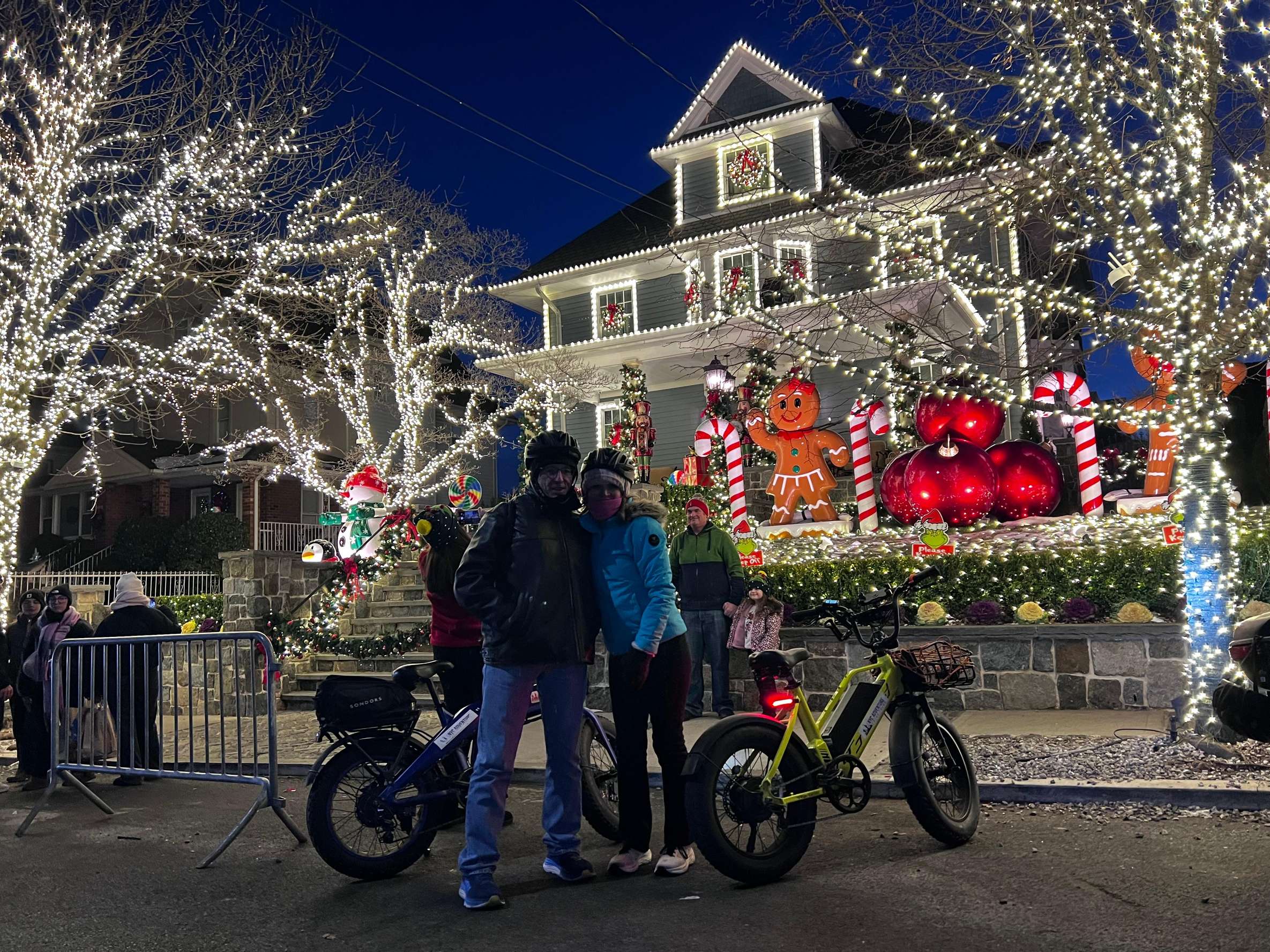
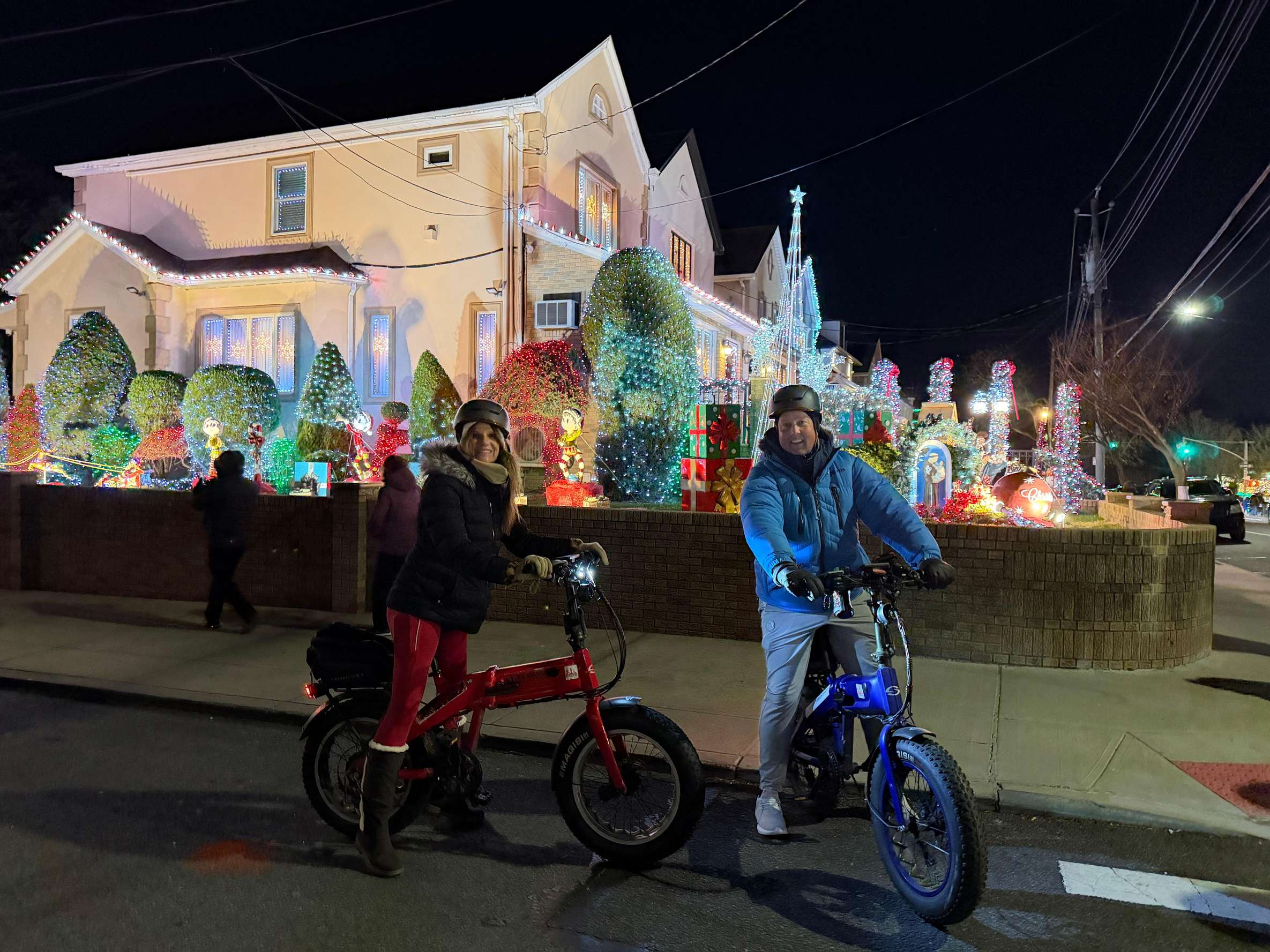
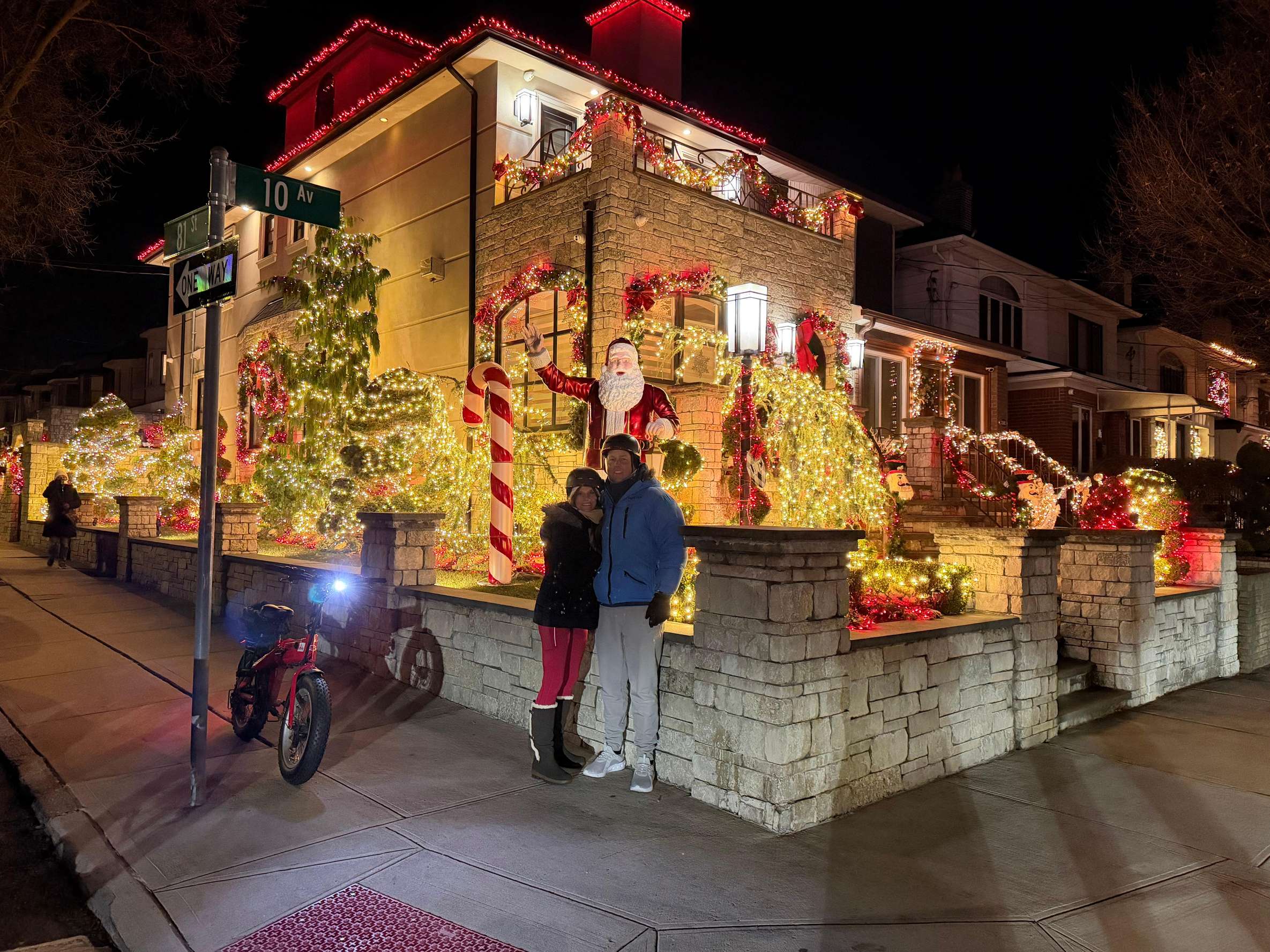
There the tour does what most visitors never manage: it rolls the whole neighborhood. The densest clusters sit on 83rd through 86th Streets between 11th and 13th Avenues, with 83rd Street from 10th to 12th Avenue the prime stretch. Lights flick on around 5 pm in December, so the timing works out.
- 1Meet, 15 minutes before departureBikes are prepared at 29th Street and 11th Avenue in the Hudson Yards area
Setup and a safety briefing come first
- 2Sunset crossingThe ferry runs down the Hudson River and New York Harbor
Clear evenings show the Statue of Liberty against the fading light
- 3Bay Ridge landingA 20-minute e-bike ride brings you into Dyker Heights
The densest displays sit on 83rd through 86th Streets
- 4Warm stopThe Mona Lisa Pastry Shoppe on 86th Street sells cannoli
Next door to Tommaso's, near 14th Avenue
- 5ReturnA 30-minute ferry ride and a 5-minute greenway ride end the night
The Manhattan skyline lights up across the water
Back at Hudson Yards, the night has run its full 5 hours; the 20 miles and both ferry crossings all sit inside that single booking window. The listed duration and the full route count the same evening from the same departure.
E-bike tour or going on your own to Dyker Heights
Three ways in, and each shapes the evening differently. The subway works: the D train from Midtown runs about 45 to 55 minutes to 79th Street, the R train 50 to 60 minutes to 86th Street, and then a 10- to 20-minute walk uphill to the decorated blocks.
It is a long cold walk on either end, and after 9 pm there are no yellow cabs waiting in the neighborhood to take you back.
Bus tours from Midtown handle the driving and keep you warm between stops, but the buses drop passengers at the neighborhood edge, where the narrow residential streets cannot take them, and you walk the crowded central blocks on foot.
A typical round trip from Midtown runs 3.5 to 4 hours, stretching to 5 on the heaviest December evenings.
Three ways to reach the lights
| Guided e-bike tour | Subway on your own | Bus tour | |
|---|---|---|---|
| Route | Ferry crossing and the whole neighborhood | D or R train, then a 10- to 20-minute uphill walk | Heated transit from Midtown |
| Time | About 5 hours door to door | 45 to 55 minutes by train each way, plus the walk | 3.5 to 4 hours, up to 5 on peak evenings |
| At the lights | You ride between the houses and stop where you like | You walk the crowded sidewalks on foot | Buses drop you at the edge; the central blocks are on foot |
| Getting home | The ferry takes the group back | No yellow cabs in the neighborhood after 9 pm | The bus carries you back |
- Route
- Ferry crossing and the whole neighborhood
- Time
- About 5 hours door to door
- At the lights
- You ride between the houses and stop where you like
- Getting home
- The ferry takes the group back
- Route
- D or R train, then a 10- to 20-minute uphill walk
- Time
- 45 to 55 minutes by train each way, plus the walk
- At the lights
- You walk the crowded sidewalks on foot
- Getting home
- No yellow cabs in the neighborhood after 9 pm
- Route
- Heated transit from Midtown
- Time
- 3.5 to 4 hours, up to 5 on peak evenings
- At the lights
- Buses drop you at the edge; the central blocks are on foot
- Getting home
- The bus carries you back
The bike splits the difference in its favor: no parking, no subway transfers, no walking marathon, and the entire neighborhood covered. The NYC: Dyker Heights Christmas Lights eBike Tour with Ferry runs the full route with a professional guide, the e-bike, and a smart walkie-talkie helmet so the group stays in contact along the way.
What it asks in return is real: you ride in winter air, in city traffic, and you need to be a confident cyclist to enjoy it.
What to look for in a Christmas lights bike tour
A night ride lives or dies on its basics, and New York writes several of them into law.
Every bicycle out between dusk and dawn needs a white front headlight visible from at least 500 feet and a red taillight visible from 300 feet, plus reflectors on the wheels and a bell or horn audible from 100 feet.
More than one earphone is not allowed, and helmets are legally required for riders 14 and younger.
Group discipline matters as much as lights. Good rides use hand and voice signals for turns, stops and hazards, call out obstacles to the riders behind, and post a sweep rider who stays with the slowest cyclists at planned regrouping points. Ask, in effect, how a tour keeps its group together on dark residential streets.
- A guide with youLive tour guide
- Free cancellationCancel up to 24 hours in advance for a full refund
- Book now, pay laterReserve your place and pay closer to the date
- A small groupSmall group
- Hotel pickupNo, you meet at the start
- Your languageEnglish
The e-bike tour with ferry ticks the boxes that count: a live professional guide, free cancellation up to 24 hours ahead, a small group, and the walkie-talkie helmet that keeps instructions clear over traffic noise.
Hotel pickup is the one thing it leaves out; you meet at the start, near two subway lines, which keeps the departure simple.
What to wear and bring for a winter night e-bike ride
Riding changes the cold equation. On a bike you sit still against your own wind, so you generate less heat than a walker while the airflow bites harder. Brooklyn evenings in December run roughly 25 to 40°F, and the harbor winds along the waterfront cut into that.
- Windproof outer shell jacketBlocks biting river winds and cruising airflow without letting cold drafts penetrate your core.
- Moisture-wicking thermal base layerMerino wool or synthetic thermal tops and bottoms pull sweat away from skin to prevent damp chills.
- Insulating fleece or down mid-layerTraps ambient body heat between your base layer and outer shell during low-effort cruising.
- Windproof cycling gloves or bar mittsHands take direct frontal wind; heavy fleece-lined windproof gloves or handlebar pogies protect finger control.
- Balaclava or fleece neck gaiterProtects your throat, cheeks, and chin from windburn and fits comfortably underneath your helmet.
- Wind-resistant pants over thermal tightsThermal long johns beneath windproof trousers stop freezing drafts from cutting through your legs.
- Merino wool socks and insulated bootsThick wool socks paired with sturdy, wind-blocking footwear keep toes warm on unheated pedals.
Three layers do the work: a moisture-wicking thermal base, a fleece or down mid-layer, and a windproof shell on top. Hands take the frontal wind directly, so windproof insulated gloves or handlebar bar mitts matter most, and a balaclava or neck gaiter under the helmet covers what the wind finds next.
Thermal long underwear under wind-resistant pants, heavy wool socks, and insulated shoes keep the legs and feet from fading first.
The cold also works on the machine. E-bike batteries lose roughly 20 to 30 percent of their range below freezing, and they should never be charged while frozen; the tour's own bikes are managed for this, which is one less thing to think about.
Plan the breaks too. The residential blocks around the lights have no public restrooms at all, so the ferry terminal areas are your realistic stops. And if a winter storm rolls in, NYC Ferry suspends service in low visibility or when ice floes clog the harbor, which can reshape the night; flexible cancellation covers you.
What else to do nearby before and after the ride
The meeting point hands you a free opening act. The Shine Bright light displays at Hudson Yards run from November 16, 2026 through January 7, 2027, open to walk through during the complex's general hours.
The outdoor light show on the Vessel costs nothing too; only the interior holiday display and mistletoe installation inside the Vessel needs a ticket. Arriving early, you catch a free light show before the ride even begins.
On the Brooklyn side, the water gives back again. The boardwalk at Empire Fulton Ferry in Brooklyn Bridge Park looks straight at the Brooklyn Bridge and the Manhattan skyline after dark, and Pier 1 holds the park's widest clear sightline of Lower Manhattan from Harbor View Lawn and Granite Prospect.
- 1Titanic Memorial Parkpark or garden1 min walkDirections
- 2South Street Seaport Museummuseum2 min walkDirections
- 3South Street Seaport Historic Districtpark or garden2 min walkDirections
Show all 10 places
- 4DeLury Squarepark or garden2 min walkDirections
- 5South Street Seaportsight3 min walkDirections
- 6Wavertreesight4 min walkDirections
- 7Ambrosesight4 min walkDirections
- 8Drumgoole Plazapark or garden5 min walkDirections
- 9Federal Hall National Memorialhistoric place7 min walkDirections
- 10George Washingtonhistoric place7 min walkDirections
- 1Bay Ridge United Methodist Churchtemple, shrine or church26 min driveDirections
- 2Young Israel Beth El of Borough Parktemple, shrine or church29 min driveDirections
If you arrive downtown early instead, the South Street Seaport district keeps a full hour busy: Pier 16 with the 1885 tall ship Wavertree and the 1908 lightship Ambrose, Pier 17's rooftop promenade over the East River, and the cobblestone streets around the 1913 Titanic Memorial Lighthouse at Fulton and Pearl.
The ferry crossing then reads as one leg of a longer waterfront night, with Dyker Heights as the bright center of it.
What to know before you book a Christmas lights bike tour
The ride starts at 29th Street and 11th Avenue in the Hudson Yards and Chelsea area, in a parking lot at that corner. Arrive about 15 minutes early, because the bikes get prepared and fitted right before departure.
New York law sets the minimum age at 16, and riders aged 16 to 20 must come with an adult. This outing suits riders who already handle city traffic; a first-time cyclist would find the Manhattan streets a lot to take on.
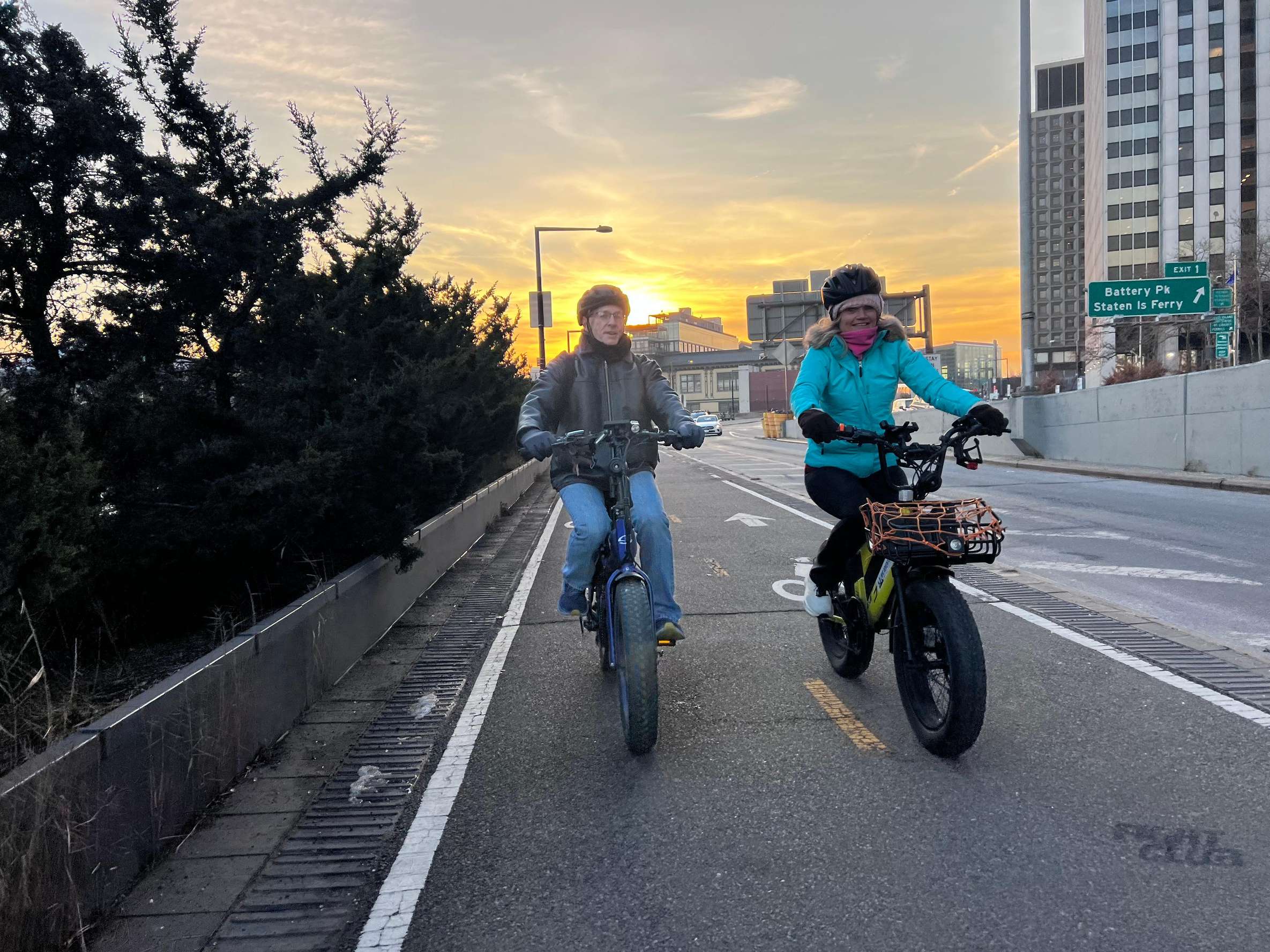
You ride a folding e-bike with electric pedal assist, so winter layers and gentle hills cost you little effort. Seat posts and stems adjust to fit riders from about 5'2" up past 6'4", and the maximum rider weight is 270 lbs.
After a safety briefing, you cycle to a nearby ferry terminal and cross the Hudson and New York Harbor as a passenger. On clear evenings the Statue of Liberty sits in view around sunset, and the Manhattan skyline lines the horizon.
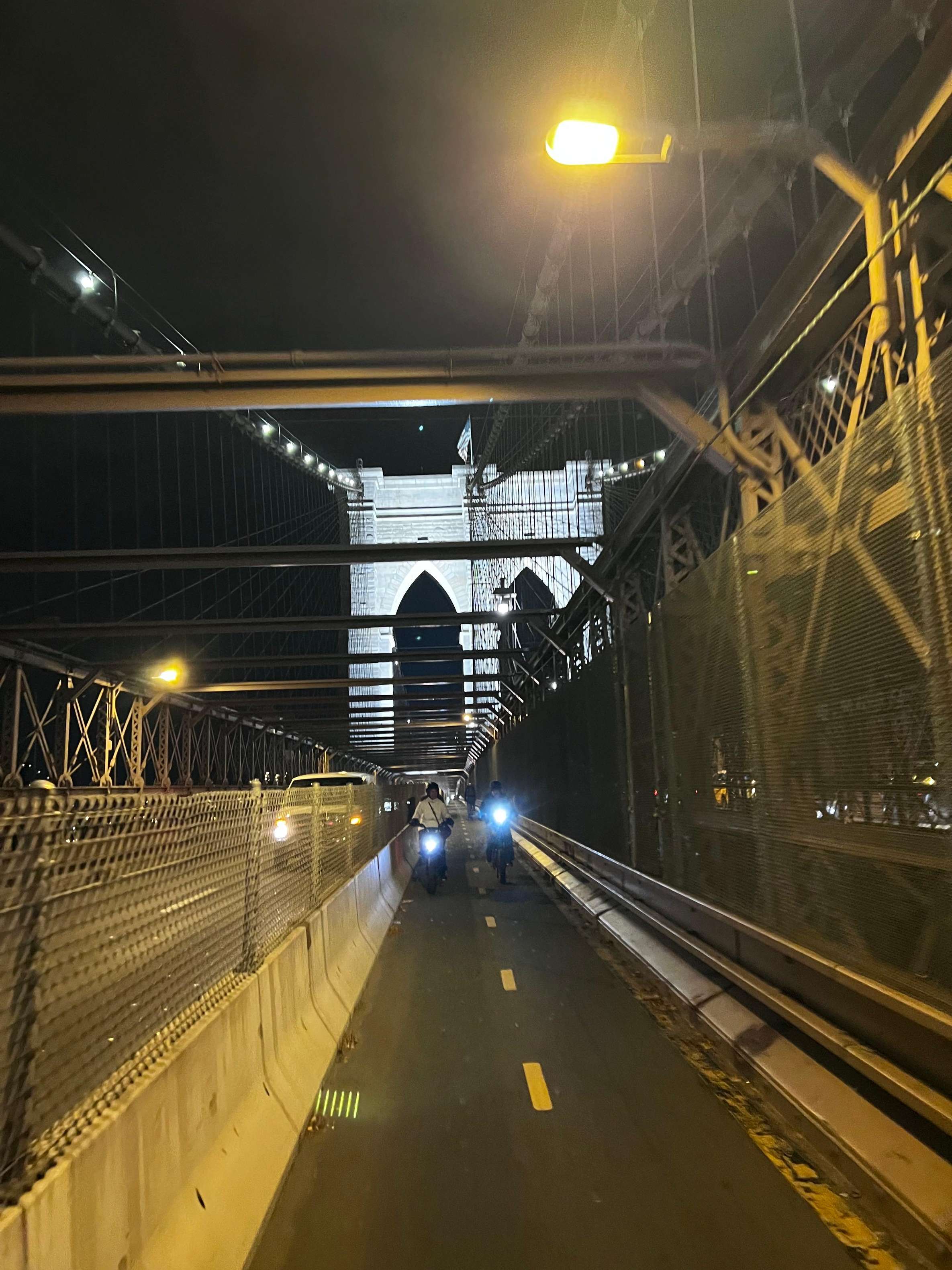
From the Bay Ridge landing it is about a 20-minute ride to Dyker Heights, where the tour covers the whole neighborhood rather than two or three showcase streets. You can ride back over the Brooklyn Bridge or take a 30-minute ferry and a short ride along the Hudson River Greenway to Hudson Yards.
Evenings run from 25°F to 40°F, and riding into the wind means you generate less heat than a walker would. Build your outfit in three layers: a thermal base, a fleece or down mid-layer, and a windproof shell, plus *windproof insulated gloves or bar mitts*, heavy wool socks and a neck gaiter.
Your booking covers the e-bike rental, a smart walkie-talkie helmet that keeps you connected to the guide, and the professional guide throughout. Food and drinks, hotel pickup, gratuities and personal expenses are not included.
The residential blocks of Dyker Heights have no public restrooms, and nothing along the decorated streets either. Plan a stop before the ride or use the 24/7 restrooms at Brooklyn Army Terminal Building A.
The displays switch on around sunset, which lands near 5 pm in December, and most homeowners turn them off between 9 and 10 pm. The tour is timed so you see the neighborhood lit.
Road closures, parades, construction, weather and NYPD activity can all alter the route on a given night. The guide reroutes on the spot, and the neighborhood loop still happens.
Worth it, if you can ride
This is the ride for confident cyclists who want the lights without a bus seat or a frozen subway walk, and who will trade indoor warmth for a sunset crossing past the Statue of Liberty.
Anyone uneasy in city traffic, riding with children under 16, or over the 270-pound bike limit will be happier with a heated bus or a walking tour instead.
Questions about the Christmas lights bike tour, answered
How long does the Dyker Heights Christmas lights bike tour run?+
Five hours from departure in Manhattan to return. That covers the ferry crossings, the waterfront riding, and the stops in Dyker Heights along a route of roughly 20 miles.
How do we get from Manhattan to Dyker Heights without cycling the whole way?+
You ride from Hudson Yards to a nearby ferry terminal, cruise down the Hudson River and New York Harbor, and get off in Bay Ridge. From there it is about a 20-minute bike ride to the lights.
What do you see on the ferry crossing?+
On the way out you pass the Statue of Liberty around sunset. If you take the ferry back, the Manhattan skyline fills the other side of the boat.
Can we bring the e-bikes on the ferry?+
Yes. NYC Ferry allows bicycles, and e-bikes with fully operable pedals are permitted too. Bikes ride outside the main cabin and stay on board until the dock.
How cold will it be, and what should I wear?+
Evenings in December sit around 25 to 40 degrees Fahrenheit, and moving air makes it feel colder. Wear a wicking base layer, a fleece or down mid-layer, and a windproof shell, with insulated gloves and warm socks.
Is there a minimum age or skill level for the e-bike tour?+
Riders must be at least 16, and anyone aged 16 to 20 rides with an adult. The tour is not for beginner riders, so you should be comfortable handling a bike in New York City traffic.
What time do the Dyker Heights lights switch on and off?+
Homeowners turn their displays on around sunset, usually between 4:30 pm and 5 pm. Most shut them off between 9 pm and 10 pm, though some stay lit until 11 pm.
How much of Dyker Heights does the ride cover?+
The route goes through the entire neighborhood rather than pausing at two famous streets. You pass decorated homes across the residential blocks, and you can stop beside them for photos.
Can we ride back over the Brooklyn Bridge instead of taking the ferry?+
Yes. The tour gives you a choice: return by ferry, or pedal back over the Brooklyn Bridge, whose towers glow with 56 LED lights after dark.
What happens if the weather turns bad?+
NYC Ferry suspends service in low visibility, strong winds, or when ice builds up in the harbor. The tour route may also change because of road closures, parades, or NYPD activity.